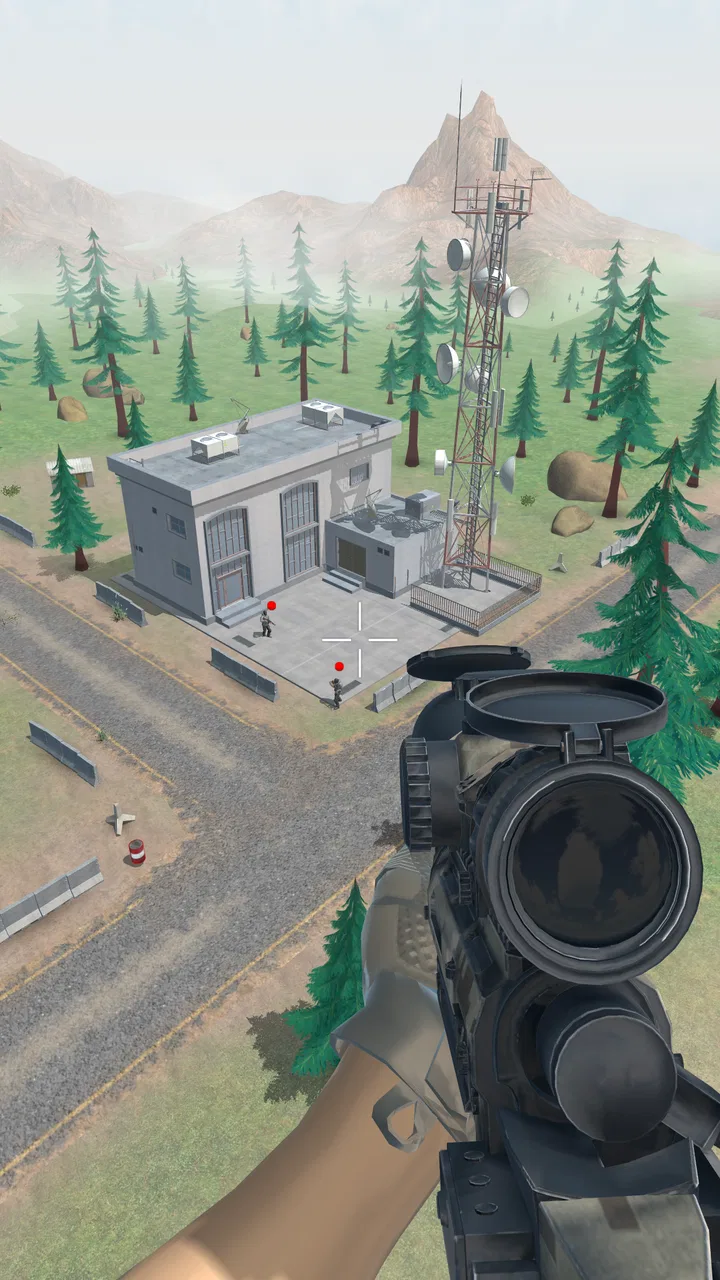
Sniper Siege: Defend & Destroy
- 4.5
- Rating
- 10.00M
- Installs
- Free
- Price

 Analysis by App-foxy
I spent time with Sniper Siege: Defend & Destroy as a quick-action game built around one simple question: can I react accurately before the situation gets away from me? That focus makes it easy to understand within moments, but the short format does not mean every session feels identical. Some rounds are relaxing because I can concentrate on timing, while others become surprisingly demanding when targets, pressure, and limited attention arrive together.
It is an action game from VOODOO, available free of charge for Android users, with a Teen content rating. The store summary asks whether you are a sharp-shooter, and that is a fair description of the central appeal. I do not need to learn a complicated control scheme before playing; the interest comes from improving my aim, reading each scene quickly, and deciding when a shot is worth taking.
The game has attracted a large audience, with an average rating of 4.5 from around 124 thousand ratings and more than 10 million installs. Those figures suggest that its pick-up-and-play style has broad appeal, although popularity alone does not make it suitable for every player. If you want a deep tactical campaign, a long story, or a competitive shooter with extensive customization, this is a much narrower experience.
You May Also Like

 Blood Strike: 2.5 Anniversary
Blood Strike’s Loadouts Turn Every Drop Into a Tactical Gamble
A close look at Blood Strike’s custom loadouts: how fast access to signature weapons reshapes its battle royale rhythm, rewards preparation, and narrows the gap between fights.

 Pandora - Music & Podcasts
Pandora’s Music Is Easy to Start, but Harder to Recover
Pandora’s strength is its low-effort path from a seed to a station. Its weak spot is how much confidence it asks you to place in connection, setup, and quiet recovery.

 8 Ball Pool
 Is Built on Rivalries, Rematches, and Routine
A close look at the rivalries, rematches, shared routines, and unanswered safety questions that turn a quick pool match into a persistent mobile community.

 Samsung Music
’s Quiet Strength Is Playing What You Already Own
Its reach comes less from spectacle than from dependable access to a personal library. That simplicity is both the app’s strongest retention engine and its ceiling.

 AccuWeather: Weather Radar
AccuWeather Review: A Quick, Clear Forecast for Everyday Decisions
For everyday plans, the best forecast is the one you can understand quickly. AccuWeather makes rain timing, radar, and local conditions easy to act on, with a few trade-offs.

 Hill Climb Racing
Why Hill Climb Racing Still Turns Crashes Into One More Run
A tiny car, a bumpy hill and one more upgrade: Hill Climb Racing keeps resurfacing because its simple chaos makes every near-miss feel personal.
More From Our News Desk



How Sniper Siege feels during short and demanding sessions
I find the demanding moments easiest to handle when I decide what deserves my attention before reacting; that turns a rushed attempt into a small test of judgement. Short sessions also make it easier to notice whether I am improving or simply repeating the same mistake. Next, I look at how the game’s feedback shapes the urge to try again.
Fast starts, simple controls, and a learning curve built around precision
My first impression was that the game gets to the point quickly. There is little reason to spend time preparing before attempting a shot, which suits the kind of session I often want from a mobile game: a few minutes while waiting, a short break between tasks, or a quick change of pace before putting the phone away. The basic premise is immediately readable, so a new player can focus on the action instead of decoding menus.
That simplicity also creates the main challenge. When the controls are easy to understand, mistakes feel personal rather than technical. I cannot blame a complicated button layout when a shot goes wrong. The useful skill is learning to slow down mentally even when the round feels urgent. I found that rushing at the start of a sequence often caused more trouble than taking a brief moment to judge the scene.
The perceived speed depends less on a long chain of commands and more on how quickly I can make accurate decisions. A successful attempt feels brisk because the action moves forward without much interruption. A difficult attempt feels slower in a good way: I begin checking positioning, timing, and the consequences of acting too early. That contrast gives the game more texture than its straightforward premise might suggest.
For someone new to this style of action game, I would recommend treating the opening sessions as practice rather than trying to chase perfect results immediately. Watch how the scene develops, identify what deserves attention first, and avoid tapping simply because something appears on screen. This approach is especially useful on a small phone, where visual details can be easier to miss.
Where the game becomes more demanding
The heavier moments are not necessarily long sessions. They are the moments when several decisions compete for my attention and a careless action has an immediate cost. That is where the game tests concentration rather than just reflexes. I noticed that fatigue mattered: after repeated attempts, I was more likely to react automatically, which made a short break more valuable than stubbornly continuing.
A practical routine is to play in small groups of attempts and stop when accuracy begins to decline. This is not a rule imposed by the game; it is simply the best way I found to keep the experience enjoyable. Because the core interaction is so direct, repeated errors can become frustrating quickly if I keep playing without changing my approach.
The game works particularly well in an everyday scenario such as a commute or a short waiting period. I can open it, play without committing to a lengthy campaign session, and leave when my time is up. It is less convincing as the only game for a long evening, because the same central shooting idea remains the main attraction. Players who need varied missions, exploration, or a strong narrative may feel that the experience becomes narrow sooner than expected.
One useful habit is to separate “speed” from “hurry.” The best runs feel fast because decisions are clean, not because I am making them blindly. I found better results by keeping my attention on the immediate priority and resisting the urge to interact with every visual element at once. That small change makes the action feel more controlled without removing its pressure.
Reliability and what I expect from regular play
In normal use, my expectations are straightforward: the game should open without unnecessary effort, respond consistently to input, and let me return to short sessions without making the process feel heavy. Its compact concept helps here because there is no need to understand a sprawling system before I can enjoy a round. The experience is at its best when I can move from opening the app to playing with minimal friction.
At the same time, free mobile games often ask the player to tolerate interruptions or optional spending, and this title includes in-app purchases ranging from $0.99 to $99.99 per item. That range is important when deciding whether the free entry point is enough for you. I would approach purchases carefully and decide in advance whether I am comfortable spending at all, rather than making a quick decision in the middle of a frustrating attempt.
The game’s Teen rating is another reason parents and younger players should check whether its tone fits their household expectations. It is presented as an action experience centered on shooting, so it is not the right choice for someone looking specifically for nonviolent puzzles, calm creative play, or a child-focused game.
One strength of a focused game like this is that I can understand what I am returning for. I am not opening it to manage a large collection or complete a complicated checklist; I am opening it because I want another attempt at accurate shooting. That clarity supports reliable short-term enjoyment. The trade-off is that players who expect a constantly expanding set of activities may find the loop repetitive.
Device age, operating system, and practical constraints
The listed minimum requirement is Android 8.0, so owners of older devices should check compatibility before planning to play. Meeting that requirement does not automatically guarantee identical results on every phone. Screen size, available system resources, background activity, and the general condition of the device can all affect how comfortable a fast visual game feels.
I would close demanding background apps before playing on an older or heavily used phone, especially if the device already feels slow in other games. That is a sensible preparation step rather than a claim about a particular hardware requirement. It also helps reduce distractions, which matter here because missed visual information can feel like a gameplay mistake even when the real issue is an overloaded device or a cramped display.
On a larger screen, aiming and observing the scene should feel more comfortable simply because there is more room to see what is happening. On a smaller phone, I would use a steady grip and avoid covering the most important part of the display with my finger. This is a small but meaningful trade-off: portability makes short sessions convenient, while a compact screen can make precision more demanding.
Battery and heat are worth considering during extended play, particularly on a phone that already struggles with demanding apps. I would not choose this game as a test of a device’s endurance, and I would avoid playing while the phone is already hot. The sensible approach is to judge it during the kind of short sessions it naturally supports, then decide whether longer use remains comfortable on your particular device.
Who should choose it over other action games?
I would recommend it to someone who wants a direct shooting challenge without learning a large number of systems first. It is a good fit for players who enjoy repeating a compact task, noticing small improvements, and turning a few spare minutes into a focused challenge. The free price also makes it easy to try before deciding whether the style suits you.
Compared with a traditional campaign shooter, this game is lighter on story and broader exploration. Compared with a multiplayer action title, it is better suited to solo, self-paced play because the appeal comes from personal accuracy rather than coordinating with a team. Compared with puzzle games, it asks for quicker visual decisions and more comfort with shooting as its central theme.
Those comparisons also show when I would skip it. If I want a rich narrative, character development, strategic loadouts, or a social competitive environment, I would choose another category. If I dislike repeating attempts after a mistake, the precision-focused structure may feel unforgiving. And if I am looking for a game that can occupy an entire evening with many different activities, I would treat this as a side game rather than my main choice.
Another important consideration is spending discipline. The free download lowers the barrier to entry, but the available purchase range means I would not hand the phone to a child without discussing purchases first. For my own use, I would play the free experience long enough to decide whether the core action is genuinely enjoyable before considering any optional transaction.
Small habits that improve the experience
My first tip is to play with a clear visual focus. Instead of scanning every part of the screen equally, I concentrate on the area most likely to determine the next action. This reduces hesitation and prevents the common mistake of reacting to a secondary detail while ignoring the immediate priority.
My second tip is to use failed attempts as information. If I miss because I acted too quickly, I slow down on the next try. If I miss because I waited too long, I adjust the timing rather than changing everything else. This makes improvement feel deliberate instead of random. The game’s straightforward controls are helpful here because there are fewer mechanical variables to confuse the lesson.
My third tip is to avoid judging performance after only one round. A single mistake can come from distraction, a poor grip, or simply an unlucky moment of attention. I look for a pattern across several attempts, then change one habit at a time. That method is more useful than repeatedly tapping faster and hoping the result improves.
I also recommend checking the phone’s comfort before settling into a long session. If the display feels cramped, the device is warm, or background notifications keep interrupting concentration, the game will seem less reliable than it actually is. A quiet, short session gives a fairer impression of its strengths and makes the precision challenge more enjoyable.
My performance verdict after using it
Sniper Siege: Defend & Destroy succeeds because it understands the value of a focused mobile action loop. It starts quickly, teaches its basic idea without demanding a long introduction, and gives me a clear reason to try again: improve the next shot. The experience feels fastest when I stay calm, and its most demanding moments reward attention more than frantic movement.
Its limitations are equally clear. The narrow focus will not satisfy players who need a campaign, extensive variety, or multiplayer depth. The Teen rating means it is not a universal family recommendation, and the in-app purchase range deserves awareness even though the game itself is free to download. Older phones should also be checked against the Android 8.0 minimum, with realistic expectations about comfort and responsiveness on aging hardware.
With an average rating of 4.5 and more than 10 million installs, it has clearly found an audience, but I would still frame it as a specialist recommendation rather than an all-purpose action game. I would suggest it to a friend who enjoys short, accuracy-based challenges and wants something easy to pick up. I would point that friend toward another option if they prefer story, exploration, teamwork, or a broader progression system.
The current version is 3.77.0, and the game remains most appealing when I treat it as a compact skill test rather than a full replacement for every other type of shooter. My final advice is simple: try it during a short, distraction-free session, judge whether the aiming loop itself is satisfying, and keep spending decisions separate from momentary frustration. If that core loop clicks, this is a convenient action game to keep around for spare minutes; if it does not, no amount of extra attempts will turn it into the deeper genre experience you may actually be seeking.
FAQs for Sniper Siege: Defend & Destroy
01What are the main features of Sniper Siege: Defend & Destroy?
Sniper Siege: Defend & Destroy offers a thrilling sniper experience with realistic graphics and engaging gameplay. Players can enjoy a variety of missions, each with unique objectives. The game includes a wide selection of customizable weapons and equipment, daily challenges, and multiplayer modes for enhanced competition. It’s designed to test both strategic planning and shooting skills.
02Is Sniper Siege: Defend & Destroy free to play?
Yes, Sniper Siege: Defend & Destroy is free to download and play, but it offers in-app purchases. Players can buy various weapon upgrades, skins, and other items to enhance gameplay. While spending is optional, these purchases can accelerate progress and improve the gaming experience. Keep an eye on special promotions for discounts on in-game items.
03What platforms is Sniper Siege: Defend & Destroy available on?
Sniper Siege: Defend & Destroy is available on both Android and iOS platforms. This ensures that players using a wide range of smartphones and tablets can enjoy the game. Regular updates are released to improve performance and add new content, ensuring compatibility with the latest devices and operating systems.
04Does Sniper Siege: Defend & Destroy require an internet connection?
An internet connection is required to access certain features in Sniper Siege: Defend & Destroy, such as multiplayer modes, leaderboards, and daily challenges. However, many single-player missions can be played offline. This flexibility allows players to enjoy the game even when they’re not connected to the internet, though an online connection enhances the overall experience.
05What age group is Sniper Siege: Defend & Destroy suitable for?
Sniper Siege: Defend & Destroy is rated for players aged 17 and older due to its realistic violence and intense action scenes. Parents should be aware of the game’s content and consider this rating when allowing younger players to download and play. The game is designed to appeal to mature audiences who appreciate tactical shooting and strategic gameplay.
Pros
- Immersive graphics enhance gameplay.
- Wide variety of weapons to choose from.
- Smooth controls with customizable settings.
- Challenging missions keep players engaged.
- Regular updates add new content.
Cons
- Requires constant internet connection.
- In-app purchases can be costly.
- Ads can interrupt gameplay frequently.
- High battery consumption on older devices.
- Limited storyline depth for casual players.

Sniper Siege: Defend & Destroy
Gallery